How to Choose and Manage a Google Cloud Security Partner
Selecting a Google Cloud security partner is a high-stakes decision that directly impacts your risk, budget, and operational resilience. The fundamental challenge is that securing a complex cloud environment requires specialized expertise most in-house teams lack. A simple misconfiguration, like an overly permissive IAM role or a public-facing storage bucket, can bypass millions in security tooling and lead to a breach.
Engaging a partner is not about offloading responsibility; it’s about acquiring the targeted expertise to build a defensible and compliant Google Cloud architecture. The goal is to find a firm that acts as an extension of your team, not just a temporary contractor.
Defining the Scope and Cost of a Security Engagement
Before evaluating partners, engineering leaders must define the problem they are trying to solve. Is it a one-time architecture review, a continuous compliance management mandate, or a full-scale security operations build-out? The scope dictates the cost.
Across the 50 cloud consulting firms we profile, a meaningful security-cost comparison starts with a written scope: the environment, compliance obligations, asset count, operating model, and response expectations.
- Security Architecture Review: A 4-6 week engagement to assess your current GCP security posture, identify misconfigurations, and provide a remediation roadmap. Expect to invest $40,000 to $75,000.
- Compliance Framework Implementation (HIPAA, PCI DSS, SOC 2): A 3-5 month project to map regulatory controls to GCP services, implement technical configurations, and prepare for an audit. Costs range from $100,000 to over $250,000, depending on environment complexity.
- Managed Security Services: A continuous engagement for threat detection, incident response, and posture management. Pricing is typically $15,000-$40,000 per month, based on the number of assets and service level agreements (SLAs).
Mis-scoping the project is a common failure point. An architecture review will not make you HIPAA compliant, and a compliance project does not replace the need for 24/7 threat monitoring. Clarity on the desired outcome is the first step to a successful engagement.
Partner Evaluation Checklist: Separating Experts from Amateurs
Once the scope is defined, the evaluation process begins. Vetting a Google Cloud consulting partner requires moving beyond marketing claims and focusing on verifiable evidence of expertise. A low hourly rate often signals a lack of experience, leading to longer project timelines and missed critical vulnerabilities. The real cost is measured in risk reduction, not the initial invoice.
Use this checklist to structure your partner evaluation and force a data-driven decision.
Google Cloud Security Partner Evaluation Framework
| Category | Criteria | What to Look For | Red Flags |
|---|---|---|---|
| Technical Certification | Verified Google Cloud Security Specialization | The partner must hold Google’s official Security Specialization. This is a non-negotiable certification proving technical validation and customer success. | Vague claims of “GCP expertise” without the official specialization. Relying on individual employee certifications instead of the company-level one. |
| Compliance Experience | Demonstrable, In-Scope Track Record | For HIPAA, PCI, or GDPR needs, demand case studies with anonymized architecture diagrams and control mappings for GCP services, such as those found in resources about data analytics consulting partners. They must prove they’ve done it before. | Generic statements about “helping clients with compliance.” Inability to explain how they configure Assured Workloads or VPC Service Controls for specific regulations. |
| Methodology & Process | Documented Playbooks | A mature partner has a clear, repeatable methodology for assessments, implementations, and incident response, including discovery, analysis, and reporting stages. | A “we’ll figure it out” approach. Lack of formal project plans or standardized templates for deliverables. |
| Tooling & IP | Proprietary Accelerators or Frameworks | Ask if they use proprietary scripts, Terraform modules, or security-as-code templates to accelerate deployment and ensure consistency. | Reliance on manual configuration for everything. No automation strategy to speak of. |
| Team Composition | Onshore, Senior-Level Architects | The team assigned to your project should consist of senior security architects, not junior analysts being trained on your dime. Verify team bios and experience. | A bait-and-switch where senior partners sell the deal, but junior staff do the work. High-turnover teams. |
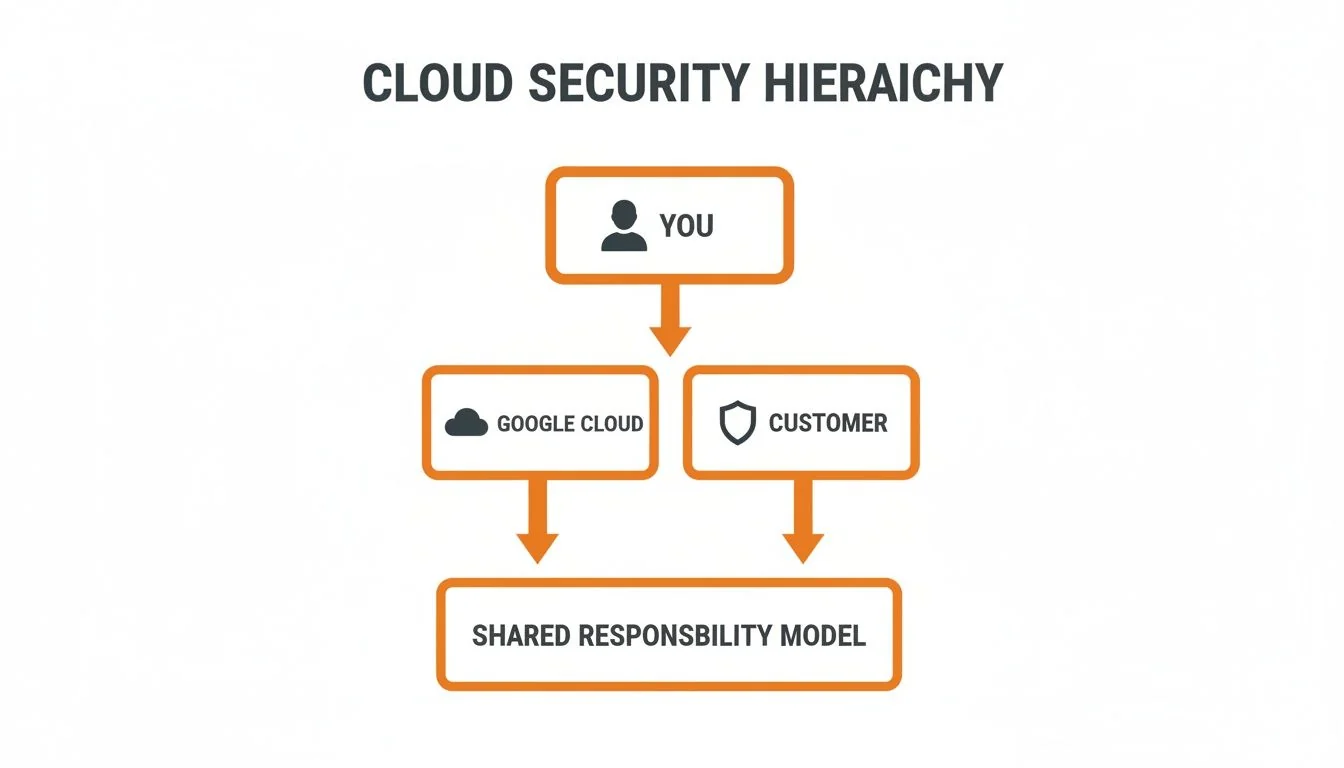
Failing to manage your side of the Shared Responsibility Model has immediate consequences. Research reveals the average organization has 115 vulnerabilities per cloud asset. These are not sophisticated zero-day exploits; they are basic misconfigurations like unauthenticated access to a Dataproc cluster or a leaky storage bucket. A competent partner finds and fixes these issues systematically. You can read the full research on cloud security vulnerabilities to grasp the scale of the problem.
Core Capabilities to Assess in a Security Partner
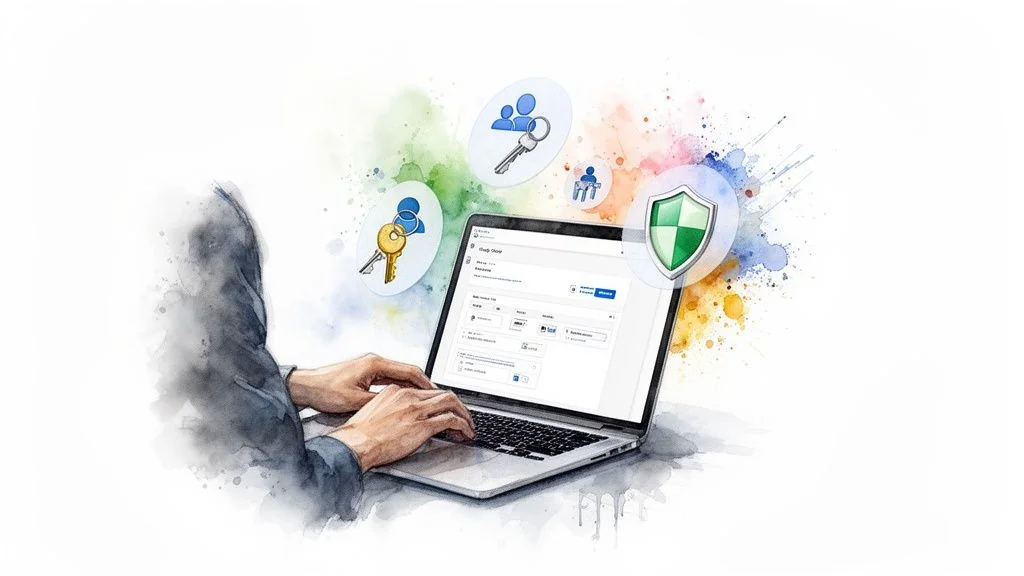
Beyond certifications, a partner’s value is determined by their ability to execute across key security domains. An engineering leader must probe their expertise in three critical areas: Identity and Access Management (IAM), Secure Network Architecture, and Threat Detection.
1. Identity and Access Management (IAM) Strategy
In the cloud, identity is the new perimeter. A partner must demonstrate mastery of Google Cloud’s IAM, centered on the principle of least privilege. They should advocate for custom roles over broad, predefined ones and have a clear strategy for managing service account credentials, which are a primary target for attackers.
A top-tier partner will push for implementing Workload Identity Federation to eliminate static service account keys wherever possible. This single change drastically reduces the attack surface associated with credential compromise, which was the root cause of 47.1% of all incidents, according to a recent report on sophisticated cloud threats.
Assess their approach to zero-trust principles, specifically how they would leverage Google’s BeyondCorp Enterprise model to enforce context-aware access controls. For more on this, see our guide to cloud security best practices.
2. Secure Network and Infrastructure Design
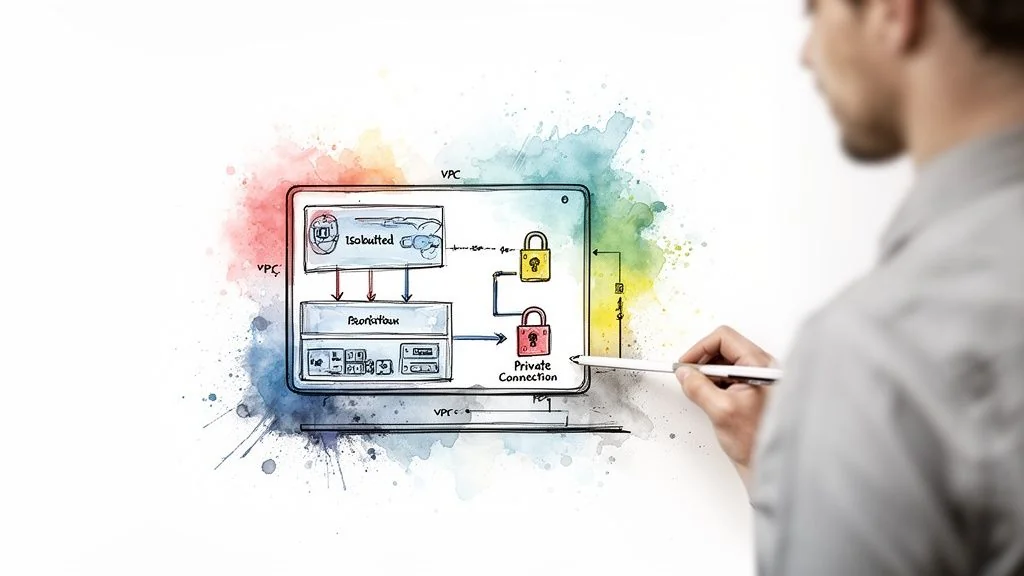
A partner’s networking philosophy must be based on segmentation and containment. They should be able to architect a Virtual Private Cloud (VPC) that isolates workloads, restricts east-west traffic, and minimizes the public attack surface.
Key technologies they must have deep implementation experience with include:
- VPC Service Controls: Creating a service perimeter to prevent data exfiltration from services like Cloud Storage and BigQuery. This is a non-negotiable control for sensitive data.
- Private Google Access: Configuring VMs to access Google APIs without public IP addresses, effectively removing them from the public internet.
- Hierarchical Firewall Policies: Applying consistent firewall rules across the entire GCP organization, not just on a per-VPC basis.
A strong partner will provide reference architectures that demonstrate these principles in action, showing how they prevent a single compromised VM from escalating into a full-blown breach.
3. Threat Detection and Response Automation
Your partner must have a proactive strategy for threat detection. According to Google’s 2025 cybersecurity forecast, 83% of organizations suffered a cloud security incident in the last 18 months. Manual monitoring is no longer sufficient.
Evaluate their expertise with Google’s native security suite:
- Security Command Center (SCC) Premium: Ask how they use SCC for centralized vulnerability management and compliance monitoring. We explain why this is critical in our guide on what cloud security posture management is.
- Chronicle Security Operations: A partner should be able to explain how they use Chronicle to hunt for advanced threats by correlating petabytes of log data.
- Binary Authorization: For DevOps-centric organizations, assess their ability to secure the software supply chain by ensuring only signed, trusted container images are deployed to GKE.
A partner’s ability to integrate and automate these tools is what shifts an organization from a reactive to a proactive security posture.

Managing the Engagement for Long-Term Success
Choosing the right partner is only half the battle. The ongoing management of the relationship determines the ultimate ROI.
- Define Clear Deliverables and KPIs: The Statement of Work (SOW) must include explicit deliverables (e.g., architecture diagrams, security policy documents, remediation reports) and Key Performance Indicators (KPIs), such as “reduction in critical vulnerabilities in SCC by 90% within 60 days.”
- Establish a Governance Cadence: Schedule weekly tactical check-ins and monthly strategic reviews with the partner’s and your own leadership to track progress against the plan and address roadblocks.
- Prioritize Knowledge Transfer: The engagement must include a formal knowledge transfer component. Your internal team must be trained to operate and maintain the security controls the partner implements. The goal is to build self-sufficiency, not permanent dependency.
By using a structured process to select and manage a Google Cloud security partner, you ensure the investment strengthens your security posture, meets compliance mandates, and enables your team to focus on innovation, not firefighting.
Next Steps: Finding Your Certified Partner
The partner selection process is resource-intensive. Using a data-driven approach is the only way to ensure you choose a firm with validated expertise.
- Finalize Your Scope: Use the cost benchmarks in this guide to create a realistic budget and scope document for internal approval.
- Shortlist 3-5 Partners: Identify partners holding the official Google Cloud Security Specialization. Do not engage firms without it.
- Conduct Rigorous Vetting: Use the evaluation framework provided here to conduct structured interviews. Demand proof, not promises.
Finding the right expertise to implement and manage your Google Cloud security is critical. CloudConsultingFirms.com provides independent, data-driven comparisons of top GCP partners to help you select a firm with proven experience in security and compliance. Find your certified GCP security partner on CloudConsultingFirms.com.
Frequently Asked Questions
What is google cloud security partner evaluation framework?
Failing to manage your side of the Shared Responsibility Model has immediate consequences. Research reveals the average organization has 115 vulnerabilities per cloud asset. These are not sophisticated zero-day exploits; they are basic misconfigurations like unauthenticated access to a Dataproc cluster or a leaky storage bucket. A competent partner finds and fixes these issues systematically.
What is identity and access management (IAM) strategy?
In the cloud, identity is the new perimeter. A partner must demonstrate mastery of Google Cloud's IAM, centered on the principle of least privilege. They should advocate for custom roles over broad, predefined ones and have a clear strategy for managing service account credentials, which are a primary target for attackers.
What is secure network and infrastructure design?
A partner's networking philosophy must be based on segmentation and containment. They should be able to architect a Virtual Private Cloud (VPC) that isolates workloads, restricts east-west traffic, and minimizes the public attack surface.
What is threat detection and response automation?
Your partner must have a proactive strategy for threat detection. According to Google's 2025 cybersecurity forecast, 83% of organizations suffered a cloud security incident in the last 18 months. Manual monitoring is no longer sufficient.
Peter Korpak
Founder
Data-driven market researcher with 15+ years helping software agencies and IT organizations make evidence-based decisions. Former market research analyst at Aviva Investors and Credit Suisse. Built the 50 cloud consulting firm profiles published on cloudconsultingfirms.com from publicly available evidence.
Connect on LinkedInContinue Reading
View all insights →Google Cloud
Top Google Cloud consulting firms and rankings
Top Cloud Consulting Companies 2026: A Use-Case Shortlist
A use-case shortlist of cloud consulting companies for enterprise transformation, AWS modernization, managed operations, Google Cloud data, and complex data migrations.
Traits of High Performing Teams for Cloud Consulting
Don't gamble on your cloud partner. Learn the 7 critical traits of high performing teams and get a checklist to evaluate consultants for AWS, Azure, or GCP.
Stay ahead of cloud consulting
Quarterly rankings, pricing benchmarks, and new research — delivered to your inbox.
No spam. Unsubscribe anytime.