Azure Cloud Consulting: Pricing, Tiers & Partners [2026]
An Azure cloud consultant is an expert hired to design, build, secure, and optimize business operations on Microsoft Azure. They provide the specialized expertise needed to build a strong, secure, and cost-effective digital infrastructure.
These services bridge the gap between business objectives and the technical complexity of the Azure platform. Hiring a consultant provides immediate access to certified experts, helping organizations sidestep common risks, accelerate projects, and achieve a higher return on their cloud investment.
What Are Azure Cloud Consulting Services?

Azure consulting is a strategic partnership that combines your team’s business knowledge with a consultant’s deep expertise in Microsoft’s cloud platform. Their primary function is to translate business goals into a secure, scalable, and financially efficient cloud architecture.
This is a strategic function, not just a technical one. Instead of a simple “lift and shift” of existing servers, an effective consultant re-evaluates how technology can drive business outcomes. They focus on architecting an environment built for operational efficiency from the ground up.
Bridging the Knowledge Gap
The Azure platform includes over 200 distinct products and services. Keeping pace with constant updates, new features, and security best practices is a full-time role. Consultants bring practical, up-to-date knowledge that internal teams might take years to acquire through trial and error.
This external expertise is critical for avoiding common mistakes that lead to budget overruns, security vulnerabilities, or poor performance.
Working with a consultant enables your organization to:
- Access Certified Talent On-Demand: Gain immediate access to professionals with high-level Microsoft certifications without the lengthy and expensive hiring process.
- Mitigate Project Risks: Leverage the experience of experts who have navigated hundreds of projects, allowing them to anticipate and prevent issues related to migration, compliance, or integration.
- Accelerate Time-to-Value: Use proven methodologies and automation to significantly reduce the time required for cloud migration, application development, or data analytics setup.
An effective Azure consultant doesn’t just provide answers; they help you ask the right questions. Their goal is to build a cloud foundation that not only supports your current needs but also adapts to your future ambitions for growth and innovation.
A Focus on Business Outcomes
The value of Azure cloud consulting services is measured by tangible business results. For a CTO or CIO, this means moving beyond technical specifications to focus on strategic achievements.
A successful partnership ensures the investment in Azure generates measurable returns, whether through reduced operational costs, increased market agility, or a strengthened security posture. The consultant’s objective is to make the cloud serve the business, not the other way around.
Why Azure Consulting Demand Is Surging
The demand for specialized Azure cloud consulting services is accelerating, driven by fundamental shifts in business operations. Understanding these drivers clarifies why selecting the right consulting partner has become a critical strategic decision.
Azure is no longer a peripheral technology; it is the core infrastructure for global enterprises seeking to modernize operations, secure data, and gain a competitive advantage.
The Forces Fueling the Growth
Demand is driven by three key forces, each presenting both a significant opportunity and a complex challenge that most internal teams are not equipped to handle alone.
These drivers are:
- Widespread Enterprise Adoption: Azure’s strength in hybrid cloud and integration with existing Microsoft ecosystems makes it a default choice for large-scale digital transformation projects.
- The Rise of AI and Data Complexity: Generative AI and advanced analytics have positioned Azure as an innovation platform. However, building and managing these workloads requires specialized skills in data engineering, MLOps, and governance.
- Escalating Security and Compliance Burdens: As mission-critical systems migrate to the cloud, the stakes for security and compliance have increased dramatically. Navigating regulations like GDPR, HIPAA, or FedRAMP within Azure requires deep, specialized knowledge.
This complexity dictates that a simple “lift and shift” migration is insufficient. Organizations require a strategic partner who can architect, secure, and optimize their cloud environment to deliver measurable business results.
A Market Expanding at Speed
The demand for Azure expertise is part of a broader trend. The global cloud professional services market is projected to reach USD 118.79 billion by 2033, reflecting a compound annual growth rate (CAGR) of 16.5%.
Given that a significant majority of Fortune 500 companies operate on Azure, a substantial portion of this spending is directed toward Azure-focused consulting, especially for complex hybrid cloud and compliance-intensive projects. You can discover more insights about the cloud services market growth.
This rapid market expansion creates a competitive field of consulting partners. However, it also makes identifying a qualified and well-matched partner more challenging.
The growth fosters innovation and provides a wider selection of specialists. Whether you require a boutique firm with deep expertise in financial services compliance or a global partner for a large-scale SAP on Azure migration, the right expertise is available. The key is knowing how to find it.
What Kind of Azure Help Do You Actually Need?
Identifying the need for Azure assistance is straightforward; defining the specific type of help required is the critical next step. Not all Azure cloud consulting services are the same. Matching your specific business challenge to the right consulting expertise is essential for a successful outcome.
Think of these services as specialized toolkits, each designed to solve a particular set of problems. Identifying the correct toolkit makes finding the right partner more efficient, allowing you to bypass generalists and engage directly with experts in your specific area of need.
To help you find the right fit, let’s look at the most common types of Azure consulting projects.
Common Azure Consulting Engagement Models
| Engagement Type | Primary Objective | Typical Scenario |
|---|---|---|
| Migration & Modernization | Move workloads to Azure and improve them. | A company wants to close its on-premises data center to cut costs and improve scalability. |
| Application Development | Build new cloud-native apps or refactor old ones. | A business needs to replace a clunky, monolithic application with a flexible microservices architecture on Azure. |
| Managed Services | Outsource day-to-day Azure operations. | An IT team is overwhelmed with maintenance and wants to focus on innovation instead of “keeping the lights on.” |
| Cost Optimization (FinOps) | Control and reduce cloud spending. | A firm’s Azure bill is growing unexpectedly, and they need to gain control over their cloud finances. |
| Security & Compliance | Harden the Azure environment and meet regulations. | A healthcare organization needs to ensure its Azure setup is HIPAA-compliant and secure against threats. |
Now, let’s dig a bit deeper into what each of these really means for your business.
Cloud Migration and Modernization Strategy
This is the starting point for many organizations. It involves moving existing applications, data, and infrastructure from on-premises data centers to Azure. For a deeper look at firms specializing in this area, see our Azure migration partner directory. However, a simple “lift and shift” rarely unlocks the full potential of the cloud. The value lies in modernization.
An effective consultant will not just replicate an old SQL database on an Azure virtual machine. They will demonstrate how migrating to Azure SQL or a managed instance can enhance performance, reduce administrative overhead, and lower costs. They help you ask critical questions before the migration begins: What should be retired? What can be moved as-is? And what needs to be re-architected for the cloud?
Application Development and Refactoring
Once on Azure, the focus shifts from hosting legacy software to building cloud-native applications. This is for businesses that need to create new solutions or break down monolithic applications into more agile architectures.
For example, a large e-commerce platform can be re-architected into smaller, independent microservices on Azure Kubernetes Service (AKS). This modular approach simplifies updates, scaling, and maintenance. The objective is to build for future adaptability, not just support past technology.
An effective consulting engagement in this area focuses on business agility. The goal is to shorten development cycles, automate deployments, and create applications that can adapt quickly to changing market demands, using Azure’s Platform-as-a-Service (PaaS) offerings.
Ongoing Managed Services and Operations
An Azure environment is a dynamic system requiring continuous management. Managed services are long-term partnerships designed to handle the daily tasks of monitoring, patching, security, and optimization.
A managed service provider (MSP) takes over routine maintenance, allowing your internal IT team to focus on strategic initiatives. This proactive approach prevents issues, ensures system stability, and frees up valuable internal resources. For a much closer look, check out our guide on Azure cloud managed services.
Cost Optimization and FinOps
Cloud spending can quickly become uncontrolled. Reports indicate that organizations waste an average of 32% of their cloud budget. Cost optimization and FinOps (Financial Operations) services are designed to implement financial discipline in cloud operations.
A FinOps consultant will:
- Analyze Spending: Use tools like Azure Cost Management to identify the primary drivers of your cloud bill.
- Right-Size Resources: Ensure you are not overpaying for underutilized virtual machines or unnecessary storage.
- Implement Guardrails: Help establish budgets, alerts, and automated policies to maintain cost control.
This type of engagement often delivers a rapid return on investment by identifying immediate savings and instilling cost-conscious practices within your teams.
Security Architecture and Compliance
Migrating sensitive data to Azure makes security and compliance paramount. This specialized service focuses on designing a robust security posture that protects assets and adheres to strict regulatory standards like HIPAA, GDPR, or FedRAMP.
These consultants act as cloud security architects. They configure Azure Security Center, implement identity and access controls, and deploy advanced threat protection. Their work ensures your environment is not only efficient but also secure and audit-ready from the outset.
A Practical Framework for Evaluating Partners
Choosing the right Azure partner is a strategic decision that will significantly impact your project’s success. Our Azure partner directory can help you start with a data-backed shortlist, and you can compare cloud consulting firms to evaluate them side by side. The systematic evaluation framework below is essential to cut through marketing claims and identify a partner with verifiable capabilities.
This five-pillar framework allows you to assess potential partners based on concrete evidence, ensuring you select a firm equipped to deliver tangible business outcomes.
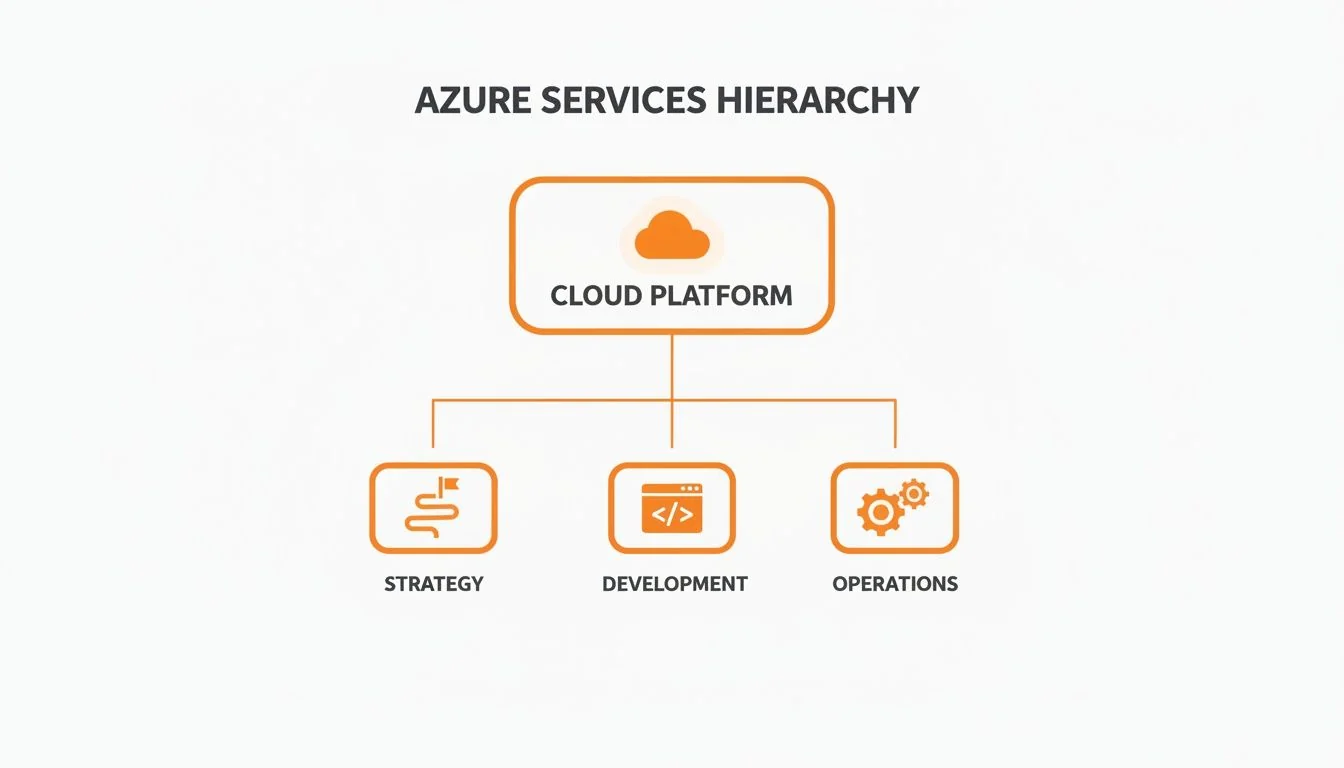
A valuable partner will guide you through the entire cloud lifecycle, from strategy and development to long-term operations.
Verifiable Certifications and Competencies
Certifications are Microsoft’s official validation of a partner’s technical proficiency. Do not rely on claims; request proof of current certifications and understand their significance.
The highest designation is the Azure Expert Managed Service Provider (MSP). This elite status is awarded to partners who have demonstrated exceptional skill in managing complex customer environments.
Beyond the Expert MSP designation, look for Advanced Specializations. These indicate deep expertise in specific, high-demand areas relevant to your project.
- Windows Server and SQL Server Migration: Essential for any modernization project involving traditional Microsoft workloads.
- Modernization of Web Applications: Demonstrates proficiency in refactoring legacy applications into modern solutions using services like Azure Kubernetes Service (AKS).
- Adoption of Analytics on Microsoft Azure: Critical if your project involves data warehousing, AI, or machine learning.
Red Flag: A partner who is vague about their certifications or lists expired credentials. Reputable experts are transparent about their elite status and will readily provide proof of their current competencies.
Proven Outcomes and Client Case Studies
A partner’s past performance is the most reliable indicator of future success. Move beyond website testimonials and request detailed case studies that mirror your project in industry, scope, and complexity.
A strong case study outlines the business problem, the implemented Azure solution, and, most importantly, the measurable business results achieved.
Ask specific, evidence-based questions:
- Describe a project where you reduced a client’s total cost of ownership by over 20%.
- What was your methodology for helping a client achieve HIPAA compliance on Azure?
- How did you execute a complex data migration with a near-zero downtime requirement?
The answers will reveal their technical expertise, problem-solving capabilities, and focus on delivering tangible value. For a wider perspective, check out our comprehensive ranking of top cloud consulting firms to see how different players compare.
Industry and Workload Specialization
General Azure knowledge is a baseline; specialized expertise is what drives significant results. The cloud challenges in financial services are fundamentally different from those in healthcare or manufacturing. A partner with industry experience understands your specific compliance requirements, data governance rules, and competitive landscape.
The same principle applies to specific workloads. If you are migrating a large SAP environment to Azure, you need a partner with a proven track record of successful SAP migrations. If the objective is to build an IoT platform, find a firm with a portfolio of projects using Azure IoT Hub. Avoid a generalist for a specialized problem.
Team Structure and Technical Depth
The success of your project depends on the individuals assigned to it. Request the resumes of key architects and engineers. Look for a balanced team of senior architects with strategic vision and hands-on engineers with deep skills in automation, security, and performance optimization.
Hybrid and multi-cloud environments are now the standard. Your partner must have proven cross-platform expertise. Designing for these complex realities is a fundamental requirement, not an optional skill.
Pricing and Engagement Flexibility
The commercial model must align with your business needs. Focus on value rather than the lowest hourly rate. A more experienced architect may solve a problem in hours that would take a junior consultant days, resulting in long-term savings.
Assess their flexibility on engagement models:
- Can they provide a fixed-price bid for a well-defined scope, such as a migration assessment?
- Is their managed services pricing transparent and linked to specific service-level agreements (SLAs)?
- Are they willing to structure a contract that includes knowledge transfer to upskill your internal team?
A true partner invests in your long-term success, offering flexible models that adapt as your cloud strategy evolves from a single project to continuous optimization.
Making Sense of Pricing and Team Models
Understanding the financial models for Azure consulting is as important as selecting the right partner. A mismatched financial structure can lead to budget overruns and misaligned expectations. The goal is to select a model that fits your project’s specific requirements.
Most firms offer several standard engagement structures, each designed for a different type of project, from short-term discovery to long-term operational partnerships.
Time and Materials: Paying for Agility
The Time and Materials (T&M) model involves paying an agreed-upon hourly or daily rate for a consultant’s time. This flexible option is ideal for projects with evolving requirements, such as agile development, complex troubleshooting, or initial strategy formulation.
The primary benefit of T&M is its adaptability. The team can pivot as new opportunities or challenges arise without requiring contract renegotiations. The trade-off is that it requires diligent budget management to prevent cost escalation.
This model is a strong fit for:
- Discovery and Strategy: When the initial goal is to define the project roadmap.
- Agile Projects: When requirements are expected to evolve iteratively.
- Deep-Dive Troubleshooting: When investigating a problem with an unknown root cause.
Fixed-Price: Paying for Predictability
A Fixed-Price engagement involves a set price for a clearly defined scope of work. This is the best option for projects with a specific, measurable outcome, such as migrating a single application or conducting a security audit. Its main advantage is budget certainty.
The success of a fixed-price model depends on a detailed and comprehensive Statement of Work (SOW). Any work outside the defined scope will require a change order and additional cost. This model incentivizes the consulting firm to deliver efficiently.
A solid fixed-price agreement forces everyone to get on the same page from day one. It removes ambiguity and ensures you and your partner have the same definition of “done,” making it ideal for projects with concrete, measurable results.
Retainers: Paying for a Partnership
A Retainer model is suited for long-term, continuous engagement. You pay a recurring monthly fee for ongoing access to Azure expertise. This is the standard model for managed services, where a partner acts as an outsourced cloud operations team, handling security, optimization, and daily management.
This model fosters a strategic partnership. The consulting partner develops a deep understanding of your environment and functions as an extension of your team. It is the ideal choice for organizations requiring consistent, proactive support.
Boutique Specialists vs. Global Integrators
The type of firm you choose is as important as the pricing model. A boutique specialist is a smaller firm with deep expertise in a niche area, such as AI model training or healthcare compliance on Azure. They are typically more agile and can provide highly specialized assistance.
Global Systems Integrators (GSIs) are large, multinational firms equipped to handle massive, complex digital transformations for enterprise clients. They possess the scale and resources for multi-year, cross-functional projects.
The market for these services is vast and growing. With GenAI cloud services expanding rapidly, partners with advanced data and AI capabilities are in particularly high demand. Often, mid-sized companies benefit most from a boutique specialist, while large enterprises require the scale of a GSI. For a deeper look, you can review key cloud computing statistics and trends.
The right choice depends on your project scope, budget, and risk tolerance. Our guide on creating a pricing strategy for consulting services can provide further detail on structuring the financial aspect of your engagement.
Finding Your Ideal Partner
You have a framework for evaluating an Azure partner. Now, how do you find one? If you want a fast starting point, our 3-question matching quiz can generate a tailored shortlist in under a minute. For a more hands-on approach, a data-driven platform can streamline the search process and help you build a qualified shortlist for your Azure cloud consulting services.
Instead of manually sifting through search results, platforms like CloudConsultingFirms.com allow you to filter the market based on your specific project criteria. This approach quickly narrows a large field of potential partners down to a manageable list of strong contenders.
From Project Scope to Partner Shortlist
The first step is to define your project’s basic parameters. A robust platform will allow you to input your scope, budget, and industry to generate an initial list of firms that meet these core requirements. This immediately eliminates partners who are a poor fit based on size or industry focus.
For instance, a mid-market manufacturing company with a sub-$200K migration budget can filter out large global integrators whose minimum project size is in the seven figures. This initial filtering saves significant time and ensures you engage only with firms that are a viable financial and operational match.
The image below illustrates how a modern directory enables you to refine options to find Azure consultants that align with your specific needs.

This type of interface allows you to specify your exact requirements for budget, team size, and industry focus, transforming a broad search into a targeted selection process.
Applying Advanced Filters for a Perfect Match
With an initial list, you can apply more specific technical filters from your evaluation checklist directly within the search tool.
Layer on filters for your non-negotiable requirements:
- Azure Certifications: Search for partners holding the Azure Expert MSP designation or an Advanced Specialization relevant to your project, such as “Modernization of Web Applications.”
- Compliance Capabilities: For regulated industries, filter for firms with proven experience in standards like HIPAA, FedRAMP, or GDPR.
- Team Size and Location: Specify whether you need a large, global team for 24/7 support or a smaller, local firm for close collaboration.
By using these filters, you ensure that every partner on your final shortlist has already met your most critical criteria. This transforms the RFP process from a broad search into a series of focused, productive conversations with a few highly qualified candidates who are well-suited for the engagement.
Your Top Azure Consulting Questions, Answered
When considering hiring an Azure expert, several key questions about cost, scope, and success metrics naturally arise. Here are answers to the most common questions from business leaders.
How Much Do Azure Consulting Services Cost?
Costs vary based on project scope and complexity. As a general guide, hourly rates for an Azure professional can range from $150 for a junior engineer to over $350 for a senior solutions architect with specialized skills in AI or cybersecurity.
For greater budget predictability, projects are often priced as follows:
- Migration Assessments: A detailed planning phase typically starts in the low five-figure range.
- Fixed-Bid Migrations: A standard application migration often costs between $50,000 and $150,000.
- Managed Services: Long-term operational management is usually a multi-year agreement, often starting at $100,000+ annually.
What Is the Difference Between a Consultant and an MSP?
A simple analogy helps clarify the distinction: building and maintaining a house.
An Azure consultant is the architect and builder. They are engaged for a specific project with a defined start and end, such as designing the cloud architecture, migrating servers, or redeveloping an application.
An Azure Managed Service Provider (MSP) is the property manager. They take over after the initial build to handle ongoing maintenance. Their role focuses on long-term operational health, including 24/7 monitoring, security patching, cost optimization, and ensuring system reliability.
A consultant executes a project. An MSP ensures the environment runs smoothly and securely over the long term. Many firms offer both services, enabling a seamless transition from project delivery to ongoing management.
How Should I Measure the Success of an Engagement?
Success must be tied to business outcomes, not just technical task completion. Without this link, you are simply incurring IT expenses without generating business value.
Insist on measuring concrete Key Performance Indicators (KPIs) that reflect your company’s strategic goals.
Effective metrics include:
- A specific, targeted reduction in Total Cost of Ownership (TCO).
- Measurable improvements in application performance, such as faster load times or higher uptime percentages.
- An increase in the deployment frequency for your development teams.
- Successfully passing a major compliance audit, such as HIPAA or SOC 2, without significant findings.
Ready to find a partner that can deliver on these outcomes? CloudConsultingFirms.com provides the data-driven tools you need to build a shortlist of vetted Azure experts. Use our interactive filters and ROI calculator to find the perfect fit for your project at CloudConsultingFirms.com.
Frequently Asked Questions
How do you bridge the knowledge gap?
The Azure platform includes over 200 distinct products and services. Keeping pace with constant updates, new features, and security best practices is a full-time role. Consultants bring practical, up-to-date knowledge that internal teams might take years to acquire through trial and error.
What is a focus on business outcomes?
The value of Azure cloud consulting services is measured by tangible business results. For a CTO or CIO, this means moving beyond technical specifications to focus on strategic achievements.
What is the forces fueling the growth?
Demand is driven by three key forces, each presenting both a significant opportunity and a complex challenge that most internal teams are not equipped to handle alone.
What is a market expanding at speed?
The demand for Azure expertise is part of a broader trend. The global cloud professional services market is projected to reach USD 118.79 billion by 2033, reflecting a compound annual growth rate (CAGR) of 16.5%.
What are common azure consulting engagement models?
Now, let's dig a bit deeper into what each of these really means for your business.
Peter Korpak
Founder
Data-driven market researcher with 15+ years helping software agencies and IT organizations make evidence-based decisions. Former market research analyst at Aviva Investors and Credit Suisse. Analyzed 200+ verified cloud projects (migrations, implementations, optimizations) to build Cloud Intel.
Connect on LinkedInContinue Reading
Azure
Top Azure consulting firms and rankings
Azure Cloud Managed Services: A No-Fluff Guide
Explore Azure cloud managed services with this definitive guide. Understand service models, calculate true ROI, and choose the right partner for your business.
Engineering High-Performance Delivery with Azure DevOps Consulting Services
Unlock your team's potential with Azure DevOps consulting services. Learn how to accelerate CI/CD, automate infrastructure, and achieve measurable ROI.
Stay ahead of cloud consulting
Quarterly rankings, pricing benchmarks, and new research — delivered to your inbox.
No spam. Unsubscribe anytime.